



Did you know that the average Canadian child consumes approximately 5 times the recommended daily sugar intake? That sweet tooth might seem harmless, but every sugary treat your child enjoys could be silently damaging their precious smile. As parents, we all want our children to maintain healthy, bright smiles throughout their lives – but the battle against sugar can feel overwhelming in today’s world.
At My Dentist at Morgan Creek, our team of experienced general dentists with years of experience in pediatric dentistry understand the challenges parents face when balancing treats and dental health. Sugar isn’t just about cavities – it’s about establishing lifelong habits that affect your child’s overall wellbeing. The good news? You don’t have to eliminate all sweet treats to protect those developing teeth.
We will provide you with information to help you understand exactly what happens when sugar meets teeth, the surprising foods that contain hidden sugars, and the simple strategies that make protecting your child’s smile easier than you might think. Whether you’re dealing with a toddler’s first teeth or a teenager’s permanent set, these insights will transform how you approach your family’s dental care routine.
How Sugar Actually Attacks Your Child’s Teeth
When your child enjoys a sweet treat, they’re not the only ones having a feast. The harmful bacteria in your child’s mouth immediately begin consuming any sugar particles left behind. Within seconds of sugar consumption, these bacteria start producing acids that attack tooth enamel – the protective outer layer of teeth.
Unlike adults, children’s teeth have thinner enamel that’s more vulnerable to these acid attacks. Research shows that children’s enamel is about 1.14 mm whereas the enamel of our permanent teeth is about 2.58 mm, making every sugar exposure potentially more damaging.
This acid attack doesn’t just happen once and disappear. Each sugar exposure triggers approximately 30 minutes of acid production. When your child sips on a sugary drink throughout the day or enjoys frequent sweet snacks, their teeth essentially remain under constant attack.
Not All Sugar Consumption Is Created Equal
Surprisingly, it’s not just how much sugar your child consumes that matters – it’s how they consume it. Consider these facts:
- Sipping sugary drinks (including natural fruit juices) throughout the day causes more damage than drinking the same amount quickly with a meal
- Sticky sweets (like gummies or dried fruit) cling to teeth longer, extending acid exposure
- Acidic sugary foods (like sour candies) deliver a double attack – sugar plus additional acid

In general, parents should keep in mind that children should avoid snacking on sugary foods throughout the day since they are at a higher risk of developing cavities compared to children who limit sweet treats to mealtimes.
The Surprising Sugar Traps: Hidden Sources in Your Child’s Diet
Parents are often shocked to discover where sugar hides in their child’s diet. Beyond the obvious cookies and candies, these everyday items contain surprising amounts of sugar:
Seemingly “Healthy” Choices That Harm Teeth
- Fruit juice – A single cup often contains more sugar than the recommended daily limit for children
- Flavoured yogurt – Some varieties pack more sugar per serving than ice cream
- Granola bars – Marketing suggests they’re nutritious, but many contain 3-4 teaspoons of added sugar
- Sports drinks – Often consumed after activities when children are already dehydrated, these drinks bathe teeth in sugar and acid

Protecting Your Child’s Smile: Essential Strategies for Parents
The good news? You don’t need to ban all sweets to protect your child’s teeth. Instead, follow these practical approaches:
- Time treats strategically – Serve sweets with meals when saliva production is higher, helping neutralize acids
- Choose better alternatives – Opt for dark chocolate over sticky candies, or fresh fruit over processed sweets
- Be mindful of frequency – Limit sweet exposures to 1-2 times daily rather than frequent snacking
- Read labels carefully – Look for hidden sugars like sucrose, high-fructose corn syrup, or anything ending in “-ose”
Frequently Asked Questions About Toothbrushes and Brushing Technique
What type of toothbrush is best for my child?
Children need age-appropriate toothbrushes with:
- Soft bristles to protect developing gums and enamel
- Appropriately sized heads that can reach all surfaces in smaller mouths
- Comfortable handles designed for less-developed motor skills

For children under 8, parents should actively assist with brushing to ensure thoroughness. Electric toothbrushes can be excellent options for older children, improving plaque removal significantly compared to manual brushing.
How often should my child’s toothbrush be replaced?
Replace your child’s toothbrush every 3 months or sooner if:
- Bristles become frayed or splayed
- Your child has recovered from an illness
- The brush has been dropped on an unsanitary surface
Pro tip: Set calendar reminders at the start of each season to make the toothbrush replacement routine.
What’s the correct brushing technique for children?
The optimal technique evolves with your child’s age:
- Ages 0-3: Use a rice-sized smear of fluoride toothpaste and gently brush in small circles
- Ages 3-6: Use a pea-sized amount of toothpaste and teach the “2×2” rule – brush all surfaces for 2 minutes, twice daily
- Ages 7+: Introduce the Modified Bass Technique – place bristles at a 45-degree angle to the gumline and brush in gentle circular motions
Making brushing fun dramatically improves compliance. Try:
- Brushing to their favourite 2-minute song
- Using a brushing app with timers and rewards
- Brushing together as a family to model good habits
Beyond Brushing: Complete Protection for Growing Smiles
While proper brushing is essential, it’s just one component of complete dental care. Just like adults, children should visit the dentist every 6 months starting from their first birthday or when their first tooth emerges. These early visits:
- Establish comfort with dental care
- Allow early intervention if problems develop
- Provide opportunity for professional cleanings and fluoride treatments
- Create a positive association with dental care
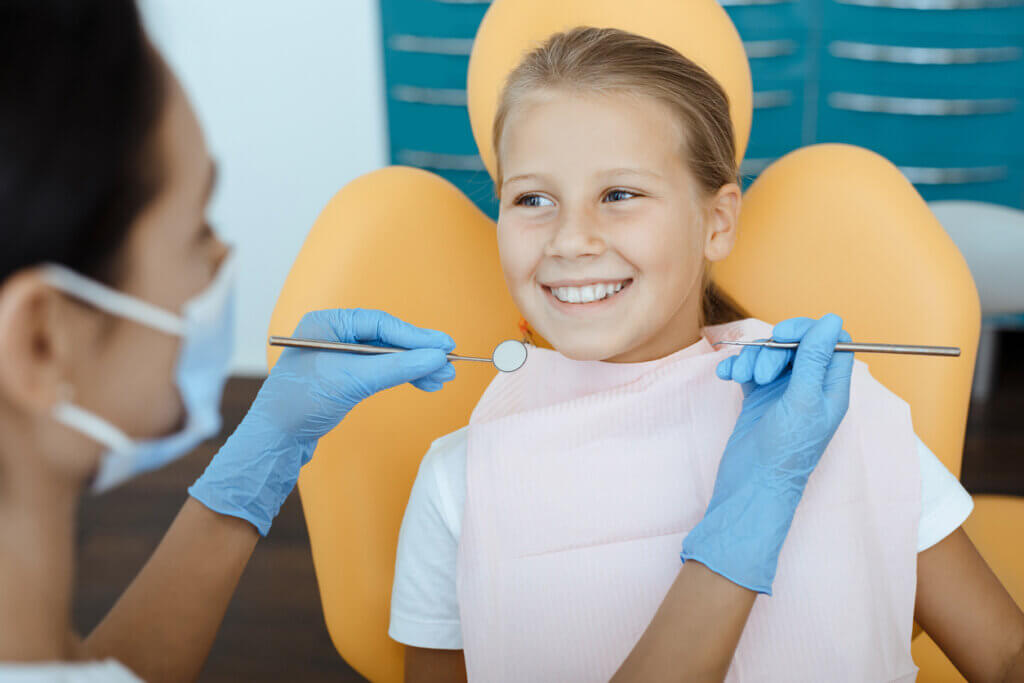
Our dentists at My Dentist at Morgan Creek are highly experienced in treating children and pediatric dental issues. Additionally, they are dedicated to making these visits positive for even the most anxious children.
The Fluoride Factor: Understanding This Powerful Protector
Fluoride remains one of dentistry’s greatest preventive tools, strengthening enamel and making it more resistant to acid attacks. For children in South Surrey and White Rock areas:
- Use age-appropriate fluoride toothpaste (following the amount guidelines above)
- Consider professional fluoride treatments during dental visits
- Discuss with your dentist if supplemental fluoride is recommended based on your local water supply
According to the Centers for Disease Control and Prevention, regular fluoride exposure can reduce cavity formation in children, as well as adults, by up to 25%.
The Sealant Solution
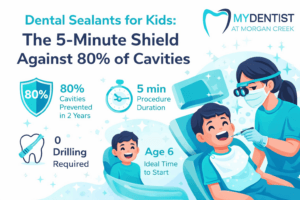
Dental sealants – thin protective coatings applied to the chewing surfaces of back teeth – provide an additional defence where most childhood cavities form. Sealants should last five years, but can last as long as 10 years. Studies show sealants can reduce cavity risk by up to 80% in molars.
The ideal timing for sealant application is:
- First permanent molars – Around age 6
- Second permanent molars – Around age 12
When Sugar Wins: Recognizing and Addressing Dental Problems
Despite your best efforts, dental issues may still develop. As a result, early identification is crucial for successful treatment.
Warning Signs Parents Shouldn’t Ignore
Contact your kid’s dentist immediately if your child experiences:
- Tooth sensitivity to hot, cold, or sweet foods
- White spots on teeth (early sign of demineralization)
- Visible holes or dark spots on teeth
- Complaints of tooth pain, especially when chewing
- Bad breath that persists despite brushing
The Ripple Effect of Untreated Dental Problems
Untreated cavities affect more than just your child’s smile:
- Physical health – Dental pain can lead to difficulty eating, nutritional deficiencies, and sleep disruption
- Academic performance – Children with dental pain are 3 times more likely to miss school
- Social development – Visible dental problems can affect self-confidence and social interactions
- Speech development – Premature tooth loss can impact proper speech patterns
Your Child Deserves a Lifetime of Healthy Smiles
Protecting your child’s teeth from sugar doesn’t require perfection – just informed, consistent choices. By understanding how sugar affects developing teeth, recognizing hidden sources, and implementing practical protective strategies, you’re setting your child up for a lifetime of healthy smiles.
At My Dentist at Morgan Creek, our team of local dentists partners with South Surrey and White Rock families to make dental care positive, preventive, and personalized. Since our team is experienced in providing effective pediatric dental treatments, it is able to create comfortable experiences for children while providing parents with the knowledge and tools needed for excellent home care.
Remember: Every small change makes a difference. Whether it’s switching from juice to water, establishing a consistent brushing routine, or scheduling that overdue dental checkup, you’re investing in your child’s future health.
Your Action Steps
- Schedule a preventive checkup for your child at My Dentist at Morgan Creek
- Examine your pantry for hidden sugar sources and make one healthier swap this week
- Evaluate your child’s brushing tools – is it time for a new toothbrush or an age-appropriate technique?
- Start a brushing chart with rewards for consistent habits
- Ask us about sealants at your next visit if your child is at the right age
Contact My Dentist at Morgan Creek in South Surrey / White Rock
Don’t wait until problems develop – let’s work together to protect your child’s precious smile from sugar’s effects. Contact My Dentist at Morgan Creek today at 778-742-5731 or complete our brief contact form to schedule your child’s comprehensive dental checkup. New patients welcome!

Frequently Asked Questions: Sugar and Children’s Oral Health
Parents across Canada and the US regularly search for answers to these common questions about sugar and their children’s dental health:
Q1. How much sugar can my child have without damaging their teeth?
Health experts recommend that children under 2 years old should have no added sugar in their diet. For children 2-18 years, added sugar should be limited to less than 25 grams (about 6 teaspoons) per day. However, from a dental perspective, frequency matters more than quantity. Five small sugar exposures throughout the day can cause more damage than the same amount consumed at once with a meal.
Q2. Can fruit cause tooth decay like candy does?
Yes, fruit contains natural sugars (primarily fructose) that can contribute to tooth decay, but whole fruits are significantly better choices than processed sweets for several reasons:
- Whole fruits contain fibre that helps clean teeth during chewing
- They stimulate saliva production, which helps neutralize acids
- The water content in fresh fruits dilutes their sugar content
- Natural fruits contain beneficial vitamins and minerals that support overall health
However, dried fruits (like raisins) can be as harmful as candy because they’re sticky and concentrated sources of sugar that cling to teeth. Fruit juices are also problematic as they contain concentrated fruit sugar without the beneficial fibre.
Q3. Does brushing immediately after eating sweets prevent cavities?
Surprisingly, brushing immediately after consuming sugary or acidic foods may actually cause more harm than good. When teeth are exposed to sugar and acids, the enamel temporarily softens. Brushing during this vulnerable state can wear away the weakened enamel. Instead:
- Wait 30-60 minutes after sugar consumption before brushing
- Rinse with water immediately after consuming sweet or acidic foods
- Chew sugar-free gum with xylitol to stimulate saliva production and neutralize the oral environment
Q4. At what age should my child stop eating sugar to protect their teeth?
There’s no specific age when children should completely eliminate sugar—even adults can enjoy occasional treats without significant dental harm. The key is establishing healthy habits early:
- Teach children to enjoy sweets as special treats rather than everyday foods
- Gradually reduce sugar in your child’s diet to adjust their taste preferences
- Focus on establishing consistent brushing, flossing, and dental visit routines
- Model healthy eating and dental care habits yourself
Q5. Can using a straw reduce sugar damage from drinks?
Yes! Using a straw positioned toward the back of the mouth when consuming sugary beverages can significantly reduce contact between sugar and teeth. This simple strategy can decrease exposure to cavity-causing sugars by directing the liquid past the front teeth and limiting contact time. This is particularly helpful for occasionally enjoyed treats like chocolate milk or 100% fruit juice.