


| ⚠ Disclaimer: This article provides general dietary guidance only and is not a substitute for personalised medical advice. Always follow the post-operative instructions provided by your implant surgeon. |
Imagine waking up after dental implant surgery, relieved it went smoothly, and then wondering: “Can I eat anything other than ice cream?” You are far from alone. Every day, patients at My Dentist at Morgan Creek in South Surrey, BC ask their dental team exactly this question, and it is one of the most important questions they could possibly ask.
Dental implants are among the most successful long-term tooth-replacement solutions in modern dentistry, with clinical studies showing 10 to 15-year success rates of 90 to 97 percent and robust outcomes extending to 20 years when patients follow proper aftercare. Yet that impressive track record depends heavily on something that often gets overlooked in pre-surgery conversations: what you put on your plate during recovery.
This comprehensive guide covers everything you need to know about foods to eat and avoid during dental implant recovery, from the first soft sip of a smoothie in the hours after surgery to the satisfying crunch of an apple months later. You will find easy meal plans, science-backed nutrient advice, scannable comparison tables, and practical tips drawn from the latest dental research. Whether you are preparing for your procedure or already in recovery, this resource is designed to help you heal faster, feel more comfortable, and protect your investment in a beautiful, lasting smile.
Why Nutrition Is Critical for Dental Implant Success
A dental implant is a titanium (or zirconia) post surgically placed into the jawbone to function as an artificial tooth root. For the implant to become a permanent part of your anatomy, it must undergo osseointegration, a biological process in which living bone cells grow onto and fuse with the implant surface. This integration typically takes three to six months and is profoundly influenced by your nutritional status.
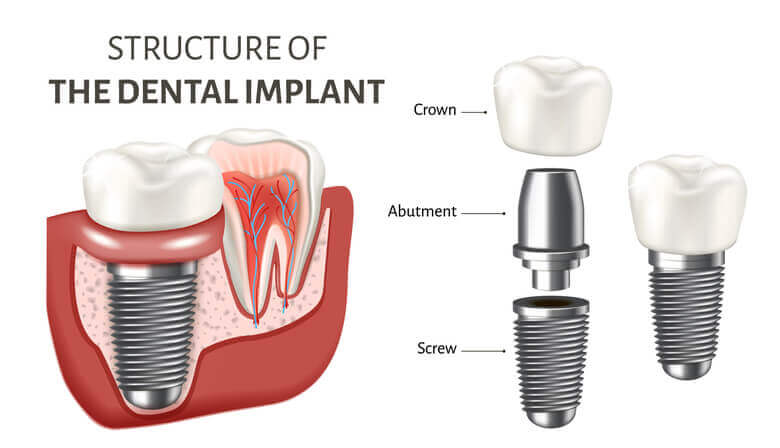
Research published in clinical nutrition journals and reviewed by the Journal of Oral Implantology consistently points to several dietary factors that influence healing:
- Protein deficiency slows collagen synthesis, weakening the connective tissue that forms around the implant site.
- Vitamin D insufficiency is associated with reduced bone mineral density and a measurably higher rate of implant failure.
- Excessive alcohol consumption suppresses the immune response and interferes with the antibiotics often prescribed post-surgery.
- Hard or crunchy foods can exert lateral forces on a healing implant that micro-fracture the newly forming bone-to-implant bond.
At My Dentist at Morgan Creek, our team, led by Dr. Madhvi Potluri, uses advanced dental technology and precision surgical guides to position every implant for optimal bone contact from day one. But even perfect placement benefits enormously from a recovery diet that supports the biology of bone healing. Think of your diet as the final, and very much patient-controlled, step in a carefully engineered surgical plan.
Dental Implant Recovery Timeline and Diet Phases
Recovery is not one-size-fits-all. Your surgeon will give you personalised milestones, but the general phases below apply to most implant patients.
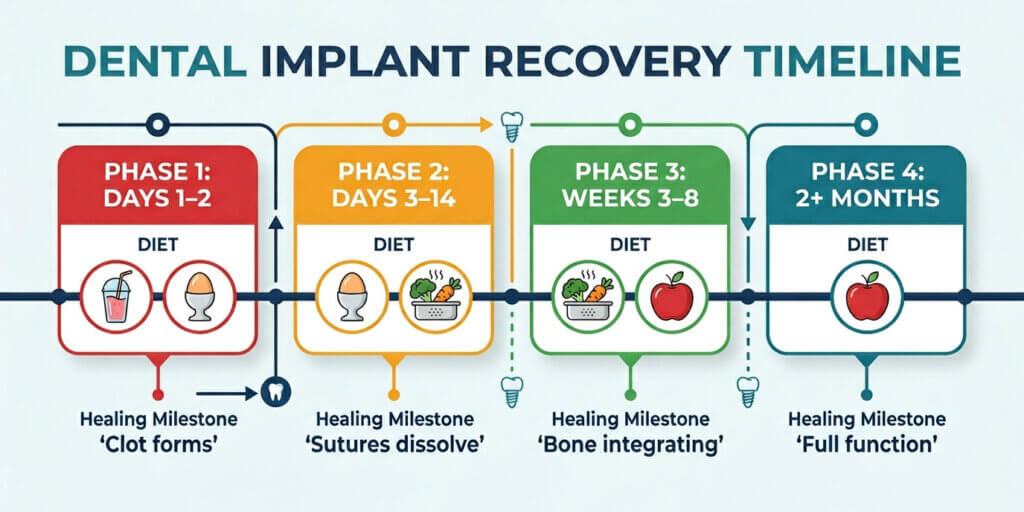
Phase 1: First 24 to 48 Hours — Liquid and Ultra-Soft Foods Only
The first two days are the most critical. A blood clot must form and stabilise at the extraction site to prevent dry socket and lay the foundation for healing. During this window:
- Consume only cool or lukewarm liquids and pureed foods.
- Avoid anything hot since heat increases blood flow and can dislodge the clot.
- Never use a straw. The suction pressure can pull the clot free and cause a painful dry socket.
- Stay well hydrated with still water, herbal teas cooled to lukewarm, and diluted juice.
Good choices: protein shakes (sipped from a cup), cold smoothies, Greek yoghurt, cool broth, applesauce, and pudding.
Phase 2: Days 3 to 14 — Soft Food Diet
Swelling and tenderness begin to diminish, and most patients feel considerably more comfortable by day four or five. You can now introduce a wider range of soft foods, but chewing on the implant side should still be avoided.
- Scrambled eggs, mashed potatoes, soft pasta, and steamed fish are excellent additions.
- Slowly reintroduce dairy-rich foods such as cottage cheese and ricotta.
- Cut all food into very small pieces and chew on the opposite side of the mouth.
Phase 3: Weeks 3 to 8 — Gradual Progression
As osseointegration advances, most patients can carefully reintroduce soft-cooked vegetables, tender chicken, and soft bread. Your dentist or implant surgeon will confirm progress at follow-up appointments. Continue to avoid hard, crunchy, and chewy items.
Phase 4: After 2 Months — Return to Normal (With Care)
Once your implant is fully integrated and your dentist gives the all-clear, you can return to a normal diet. Even at this stage, habits like chewing ice, biting nails, or opening packages with your teeth should be avoided, not because of implant failure risk, but to protect the crown restoration placed on top of the implant.
Foods to Eat During Recovery
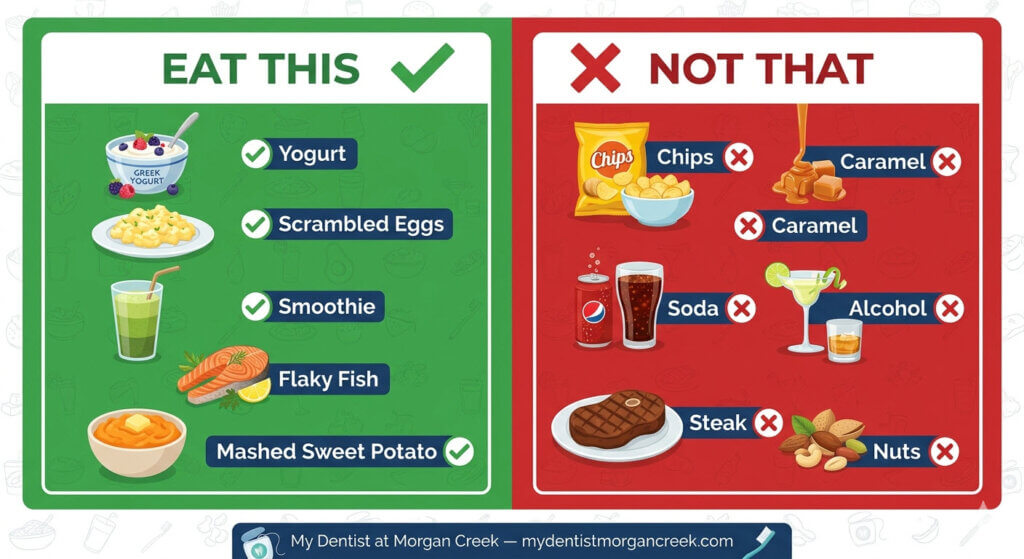
The goal during recovery is to consume foods that are soft enough to cause zero trauma to the surgical site while being nutritionally dense enough to fuel the body’s intensive healing processes. The table below outlines the best choices at a glance.
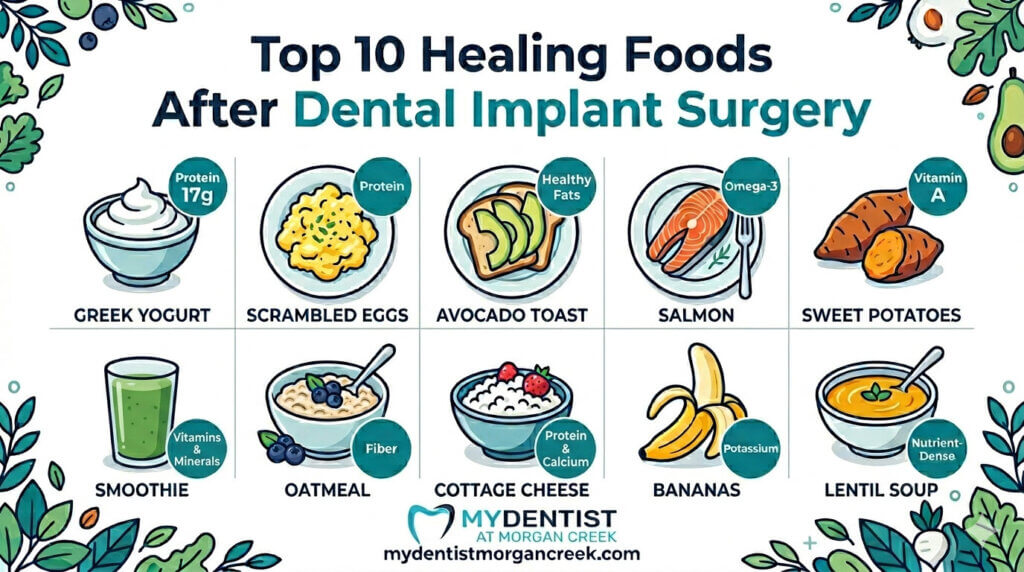
| Food | Why It Helps | Key Nutrients | Serving Ideas |
| Greek yogurt | High protein supports tissue repair; probiotics reduce infection risk | Protein, calcium, probiotics | Plain, with honey; avoid granola |
| Scrambled eggs | Soft texture, rich in complete protein and choline for cell repair | Protein, choline, vitamin D | Soft-scrambled with butter |
| Avocado | Healthy monounsaturated fats reduce inflammation; easy to mash | Healthy fats, vitamin E, potassium | Mashed on soft bread or alone |
| Mashed sweet potato | Vitamin A accelerates wound healing; soft, easy to chew | Vitamin A, vitamin C, fibre | Mashed with butter; no chunky toppings |
| Smoothies (no straw) | Delivers concentrated nutrients without chewing | Varies — protein, vitamins, minerals | Blend with protein powder, banana, milk |
| Soft-cooked oatmeal | Warm (not hot), filling, anti-inflammatory beta-glucan | Fibre, zinc, B vitamins | Cook well; add honey or banana |
| Pureed / blended soup | Hydrating, nutrient-dense, comforting | Vitamins, minerals, collagen (bone broth) | Cool to lukewarm; strain out solids |
| Cottage cheese | High casein protein for sustained tissue repair | Protein, calcium, phosphorus | Plain or with soft fruit |
| Flaky fish (salmon, tilapia) | Omega-3 fatty acids lower inflammation; tender texture | Omega-3, protein, vitamin D | Baked until very tender; flake apart |
| Hummus | Plant protein and fibre; smooth texture | Protein, iron, B vitamins | Dip soft bread or eat with spoon |
| Banana | Soft, easy to chew; natural energy and electrolytes | Potassium, vitamin B6, magnesium | Mashed or sliced very thin |
| Applesauce | Zero chewing required; vitamin C for collagen synthesis | Vitamin C, fibre (soluble) | Unsweetened preferred; serve at room temp |
| Steamed soft veggies | Anti-inflammatory phytonutrients once past first 2 weeks | Vitamin C, folate, potassium | Carrots, zucchini, squash — steam until very soft |
Foods to Avoid During Recovery
Knowing what not to eat is just as important as building a nourishing soft-food menu. The items below pose real risks to your implant, healing tissue, and overall recovery timeline.
| Food / Drink to Avoid | Why It’s Harmful | Safe Alternative |
| Hard / crunchy foods (nuts, chips, popcorn, raw carrots) | Can crack or dislodge implant crown; excessive bite force disrupts healing bone | Hummus, mashed avocado, soft-cooked oatmeal |
| Sticky / chewy foods (caramel, gum, taffy, bagels) | Pull on the implant site; risk of displacing temporary crown or sutures | Soft banana, yogurt, scrambled eggs |
| Spicy or acidic foods (hot sauce, citrus, tomato) | Irritate healing mucosa; delay tissue regeneration | Mild herb seasoning; applesauce instead of citrus |
| Very hot foods / drinks (first 48 hrs) | Increase bleeding risk by dilating blood vessels; dissolve clot | Lukewarm or cool foods and drinks only |
| Alcohol (≥2 weeks post-op) | Impairs immune function; interacts with antibiotics; slows bone healing | Water, herbal tea, diluted juice |
| Carbonated drinks | Bubbles create pressure; acidity erodes healing tissue | Still water, coconut water, warm herbal tea |
| Tough / chewy meats (steak, jerky) | Require strong bite force; risk of microstress at implant site | Flaky fish, soft-poached chicken, pureed lentils |
| Seeds and grains (sesame, quinoa, poppy) | Can lodge in surgical site and cause infection or irritation | Seedless soft bread, smooth nut butters |
| Smoking / tobacco (any point) | Reduces blood supply to bone; dramatically increases implant failure risk | Consult your dentist for cessation resources |
Key Nutrients That Speed Healing (Backed by Science)
Eating soft foods is the first step; making those soft foods nutritionally powerful is the second. Here is a science-backed overview of the nutrients that matter most during implant recovery, along with the evidence supporting each.
| Nutrient | Role in Healing | Top Food Sources | Daily Goal |
| Protein | Builds collagen, repairs soft tissue, maintains immune defences | Eggs, fish, Greek yogurt, cottage cheese, legumes | 1.2–1.6 g per kg body weight |
| Calcium | Provides mineral matrix for new bone formation around implant | Dairy, fortified plant milks, tofu, broccoli | 1,000–1,200 mg/day |
| Vitamin D | Regulates calcium absorption; low levels linked to implant failure in multiple studies | Salmon, fortified milk, eggs, sunlight | 800–2,000 IU/day (check with dentist) |
| Vitamin C | Essential for collagen synthesis and wound closure | Applesauce, soft mango, bell peppers (cooked), kiwi | 75–90 mg/day |
| Zinc | Accelerates epithelial tissue regeneration; supports immune response | Soft-cooked oatmeal, eggs, dairy, legumes | 8–11 mg/day |
| Omega-3 fatty acids | Reduces pro-inflammatory cytokines; supports bone cell activity | Salmon, flaxseed oil (in smoothies), walnuts (ground) | 250–500 mg EPA+DHA/day |
| Antioxidants (vitamins A & E) | Neutralise free radicals that delay wound healing | Sweet potato, avocado, mashed pumpkin | Varies — aim for colourful soft produce |
The Science in Brief
Protein and wound healing: A systematic review of nutrients confirmed that adequate dietary protein is essential for collagen formation and the proliferative phase of wound repair. Patients in a protein-deficient state show delayed healing across multiple tissue types.
Vitamin D and implant stability: A review examined the relationship between vitamin D levels and dental implant outcomes. Researchers found a consistent association between vitamin D deficiency and a higher incidence of early implant failure, supporting the clinical recommendation to optimise vitamin D status before and after surgery.
Omega-3 fatty acids and inflammation: Research demonstrated that omega-3 supplementation in the peri-operative period was associated with reduced peri-implant inflammation markers. Dietary omega-3s from fatty fish and flaxseed offer a food-first approach to the same anti-inflammatory benefit.
Vitamin C and collagen synthesis: According to research, vitamin C is the required cofactor for two enzymes, prolyl hydroxylase and lysyl hydroxylase, that stabilise the collagen triple helix. Without adequate vitamin C, collagen fibres are structurally weak and gingival (gum) wound closure is prolonged.
Sample 7-Day Meal Plans
Week 1 Meal Plan — Liquid and Ultra-Soft Phase
All foods should be cool to lukewarm. Nothing hot. No straws.
| Day | Breakfast | Lunch | Snack | Dinner |
| Day 1 | Protein shake (no straw) + applesauce | Cool blended vegetable soup | Greek yogurt (plain) | Pureed lentil soup (lukewarm) |
| Day 2 | Smoothie: banana + protein powder + almond milk | Cottage cheese with soft mashed banana | Applesauce | Mashed avocado + pureed sweet potato |
| Day 3 | Greek yoghurt (plain) | Blended butternut squash soup | Pudding cup | Mashed potato with butter (lukewarm) |
| Day 4 | Oatmeal (very soft) + honey | Cottage cheese + pureed pear | Cool smoothie | Silken tofu blended in miso soup |
| Day 5 | Soft scrambled eggs + Greek yoghurt | Pureed carrot-ginger soup | Applesauce | Scrambled eggs + soft mashed sweet potato |
| Day 6 | Protein shake + soft oatmeal | Hummus with tiny soft bread pieces | Yogurt | Flaky baked tilapia (very tender) + mashed cauliflower |
| Day 7 | Greek yoghurt + mashed banana | Blended creamy tomato soup (lukewarm) | Cottage cheese + peach puree | Soft scrambled eggs + mashed avocado |
Weeks 2 to 4 Meal Plan — Soft Food Progression
Chew on the opposite side from the implant. Cut food into small pieces. Avoid hard, crunchy, or chewy items.
| Day | Breakfast | Lunch | Snack | Dinner |
| Day 1 | Soft oatmeal + banana slices | Soft pasta with butter and parmesan | Greek yogurt + honey | Baked salmon (flaky) + steamed zucchini |
| Day 2 | Scrambled eggs + soft toast (crusts removed) | Ricotta on soft bread + tomato soup | Applesauce | Ground turkey patty (very moist) + mashed potato |
| Day 3 | Banana smoothie + soft oatmeal | Hummus + soft pita triangles | Cottage cheese + peach | Poached chicken (shredded) + steamed carrots |
| Day 4 | Greek yogurt parfait (no granola) | Soft vegetable soup + soft dinner roll | Banana | Flaky white fish + mashed sweet potato |
| Day 5 | Eggs Benedict (no toast; hollandaise sauce) | Avocado pasta (smooth sauce) | Protein shake | Soft tofu stir-fry (low spice) + soft rice |
| Day 6 | Soft oatmeal + stewed apple | Cottage cheese + soft crackers | Smoothie with protein powder | Baked tilapia + pureed peas |
| Day 7 | Smoothie bowl + soft-boiled egg | Lentil soup + soft bread | Greek yogurt | Slow-cooker pulled chicken + mashed potato |
Practical Tips for Eating Comfortably After Dental Implant Surgery
Beyond choosing the right foods, how you eat matters just as much. These strategies will make mealtimes more comfortable and protect your healing site throughout recovery.
- Stay well hydrated — drink at least 8 glasses of still water per day. Dehydration slows cellular repair and thickens saliva, increasing infection risk.
- Never use a straw — the suction creates negative intraoral pressure that can dislodge the blood clot, causing painful dry socket or dislodging temporary healing caps.
- Temperature matters — keep all foods and drinks cool to lukewarm for the first 48 hours post-surgery to minimise swelling and bleeding. After two days, warm foods are fine; very hot foods/drinks should still be avoided for two weeks.
- Chew on the opposite side — consciously route food away from the implant during the first four to eight weeks. Over time, this becomes automatic.
- Small, frequent meals — rather than three large meals, opt for five or six smaller portions. This is easier on your jaw and keeps energy levels stable for healing.
- Rinse gently — after meals, rinse with warm salt water (half a teaspoon dissolved in 8 oz water) beginning 24 hours post-surgery. Swish gently; do not spit forcefully.
- Prepare meals in advance — cook and freeze individual portions of soups, pureed vegetables, and soft proteins before your surgery date. Recovery is much easier when nourishing food is ready to go.
- Read supplement labels carefully — if you take vitamin D, calcium, or zinc supplements, check doses with your dentist or pharmacist to avoid exceeding safe upper limits.
Frequently Asked Questions
How long do I need to eat soft foods after a dental implant?
For most patients, a soft-food diet is necessary for four to eight weeks after implant placement. The exact timeline depends on your bone quality, the number of implants placed, and whether bone grafting was performed. Your implant team at My Dentist at Morgan Creek will provide personalised milestones at each follow-up visit.
Can I drink coffee after dental implant surgery?
It is best to avoid hot coffee for the first 48 hours, as heat increases the risk of bleeding and clot disruption. After that initial period, lukewarm coffee is generally tolerated, but caffeine can impair sleep quality and dehydrate the body, both of which slow healing. Black coffee is preferable; adding significant sugar can promote bacterial growth near the surgical site.
Is alcohol really that harmful during implant recovery?
Yes, and the risk is multifactorial. Alcohol thins the blood (increasing bleeding), suppresses immune function, interferes with antibiotics and pain medications prescribed post-operatively, and impairs the liver’s role in vitamin D metabolism. Most implant surgeons recommend abstaining from alcohol for at least two weeks, and ideally longer during the osseointegration phase.
What are the best protein sources that are also safe to eat after surgery?
Greek yoghurt, cottage cheese, scrambled or poached eggs, silken tofu, smooth nut butters (without chunky pieces), soft-cooked legumes blended into soups, protein shakes, and flaky baked fish are all excellent choices. These provide complete or complementary amino acid profiles without requiring significant chewing force.
Can I eat ice cream after dental implant surgery?
Yes, plain, smooth ice cream or gelato can be soothing in the first 24 to 48 hours due to its cool temperature and soft texture. However, avoid flavours with hard mix-ins like nuts, chocolate chips, or cookie pieces. After the first two days, the sugar content of frequent ice cream consumption could increase bacterial activity near the healing site, so moderation is wise.
When can I eat on the side where my implant is?
You should avoid placing food directly over the implant site for at least four to six weeks. Once your surgeon confirms that healing is progressing well at a follow-up appointment and the final crown has been attached, you can gradually reintroduce normal chewing on that side.
Do vitamin supplements help dental implants heal faster?
Supplements can help correct deficiencies that might otherwise slow healing, particularly vitamin D, vitamin C, and zinc, but they should not replace a nutritious diet, and they are not magic accelerators. Always consult your implant dentist before starting any new supplement regimen, as some (like high-dose vitamin E or fish oil) can increase bleeding risk in the immediate post-surgical period.
Will smoking affect my dental implant even after surgery?
Yes, significantly. Smoking constricts blood vessels, reducing oxygen and nutrient delivery to healing bone and soft tissue. Research consistently shows that smokers have a two-to-four times higher implant failure rate compared to non-smokers. If you smoke, it is never too late to quit, and your dentist can connect you with cessation resources.
Contact My Dentist at Morgan Creek for Your Dental Implant Consultation
Understanding the foods to eat and avoid during dental implant recovery is one of the most empowering things you can do as a patient. Your diet directly influences every stage of the healing process, from the moment that the blood clot stabilises in the first 24 hours to the final integration of titanium with bone months later. By prioritising soft, nutrient-dense foods, staying well hydrated, avoiding the foods that can disrupt healing, and following the personalised guidance of your implant team, you give yourself the very best chance of achieving the 90 to 97 percent success rate that modern implant dentistry makes possible.
The right meal choices are not a sacrifice; they are an investment in a lifetime of comfortable, confident eating with your new smile.
| Ready to Begin Your Dental Implant Journey? The team at My Dentist at Morgan Creek in South Surrey, BC, specialises in advanced, comfortable dental implant care — from 3D imaging and guided placement to personalised recovery support. Dr. Madhvi Potluri and our patient-centred team are here to guide you every step of the way. 📞 Call us: 778-742-5731 | 🌐 Book online 📍15252 32 Ave #101, South Surrey, BC V3Z 0R7 |
This post is for informational purposes only and does not constitute individualized dental advice. Please consult a licensed dental professional for guidance specific to your diet after a dental implant procedure.
© 2026 My Dentist at Morgan Creek · South Surrey / White Rock, BC