


Table of Contents
ToggleBasic Facts About Dental Implants
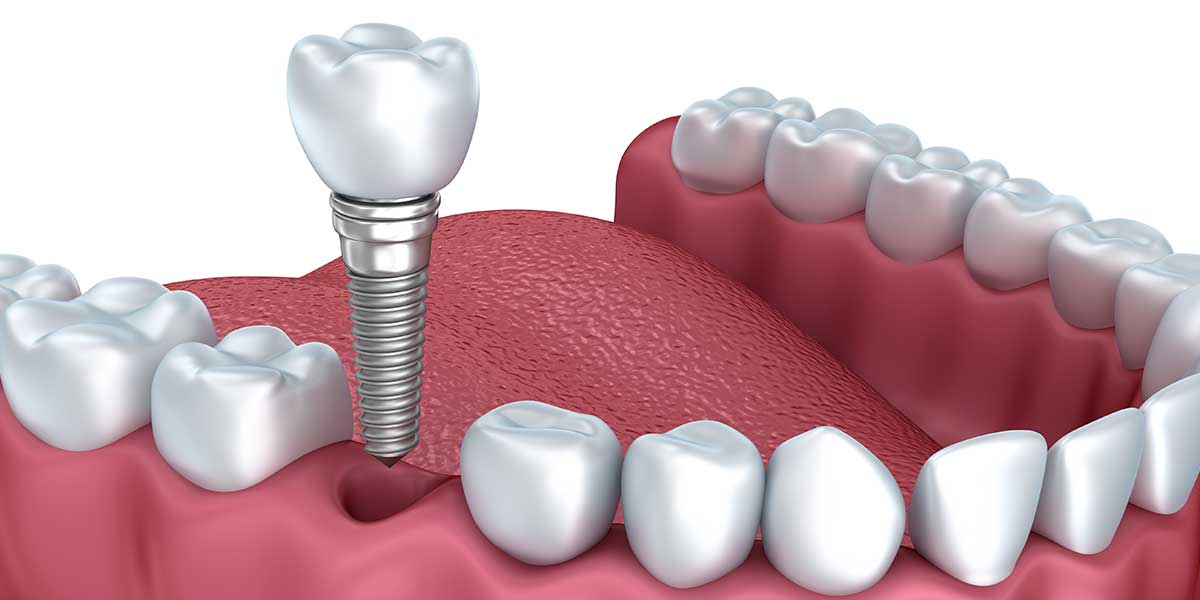
Dental implants have become increasingly popular because of their ability to restore oral health while simultaneously providing a beautiful, natural-looking smile that is also permanent. That’s why many people decide to choose dental implants to replace missing teeth. The implant posts are medical-grade titanium screws that serve as roots that support permanent tooth prosthetics. These artificial roots are inserted in the bone beneath the gums.
Benefits of Dental Implants
Similar to Natural Teeth
Unlike dentures, dental implants are fixed to your jaw bone, therefore they perform much like your natural teeth. You don’t have to worry about chewing or biting issues nor whether they will fall out. However, just like your natural teeth, you need to practice proper oral hygiene in order to preserve them in good condition.
Support and Stabilize Adjacent Teeth
When a tooth is removed, the teeth adjacent to the missing tooth may begin to lose their stability and can shift towards the gap, pulling our teeth out of position. When our teeth lose their stability, it not only affects the effectiveness of our biting and chewing abilities but also our appearance. When teeth move out of position, we can also develop issues with tooth replacement in the future. Furthermore, we may even experience temporomandibular joint (TMJ) issues due to poor bite – this can cause pain and headaches.
Offer Protection Against Bone Loss and Gum Disease
Bone loss can occur in the jaw when there are no tooth roots or implants to keep the jaw bone stimulated by the pressure of chewing. When this stimulation is lost due to the removal of a tooth, the bone is reabsorbed into our body. In fact, during the first year after losing a tooth, 25% of the bone is lost – the loss continues over time. In addition, the gap formed after the loss of a tooth can act as a food and bacteria trap which can result in gum disease.
Prevent Premature Aging Issues
Facial sagging can be an issue that develops after tooth and jawbone loss. Facial sagging results due to the fact that the lower third of the face starts to collapse and gradually the distance between the tip of the nose and the chin is reduced. This condition causes noticeable wrinkling around the mouth. The lips also begin to thin and the chin becomes more pointed. Consequently, people’s facial appearance ages prematurely. However, when extracted teeth are replaced by dental implants, the jawbone remains stimulated so bone loss and facial sagging are avoided.
Why Choose Us For Your Dental Implants
My Dentist at Morgan Creek in South Surrey / White Rock, BC, offers comprehensive dental implant restoration options that are designed specifically for each of our patients. Our dental office is one of the first in the area to introduce the latest technologies in dentistry. Digital x-rays, Sirona 3D imaging, 3D printing, Cerec® CAD/CAM technologies and more to help make dental implant procedures as precise and painless as possible.
What’s more, the team at My Dentist office at Morgan Creek is one of the leading dental offices in dental implants. Our principal dentists with over 25 years of experience as general dentists and 16 years in practicing implant dentistry in South Surrey and White Rock, BC, have the capability to deal with complex cases. My Dentists Office is also one of the first dental offices to introduce guided implant surgery in the area in 2005 and more recently around 2010, 3D Printing technology and Cerec® CAD/CAM technology, into general dental practice. As a result, we receive many patient referrals for dental implants.
Determining Whether Dental Implants Are Right For You
- If you have missing teeth.
- If you have broken or decayed teeth.
- If your dentures or bridges are uncomfortable.
Then dental implants may be a great option for you!
To determine if implants are right for you, book a consultation with My Dentist at Morgan Creek. We will examine you to determine whether you have adequate bone support and healthy gums that are able to support the new tooth structure.