


If you are considering dental implants, you’ve probably asked yourself the same question a lot of our patients ask: Am I a candidate for dental implants? It’s a fair question, and the honest answer is that most people are better candidates than they think. The South Surrey / White Rock area provides access to some of the most advanced restorative care to help you reclaim your smile and your health. Living with missing teeth, failing dental work, or loose dentures is more than just a cosmetic issue. It changes how you eat, how you speak, and how you feel about yourself when you are out with friends at the White Rock pier. If you live in South Surrey or nearby communities, you deserve a permanent solution that feels like your own natural teeth.
Missing teeth can lead to a domino effect of oral health problems, including the shifting of adjacent teeth and a gradual loss of jawbone density. This can eventually lead to facial sagging and a prematurely aged appearance. This guide is designed to give you clarity on where you stand and help you perform a self-assessment before you step into our clinic for a professional evaluation.
What Dental Implants Really Are
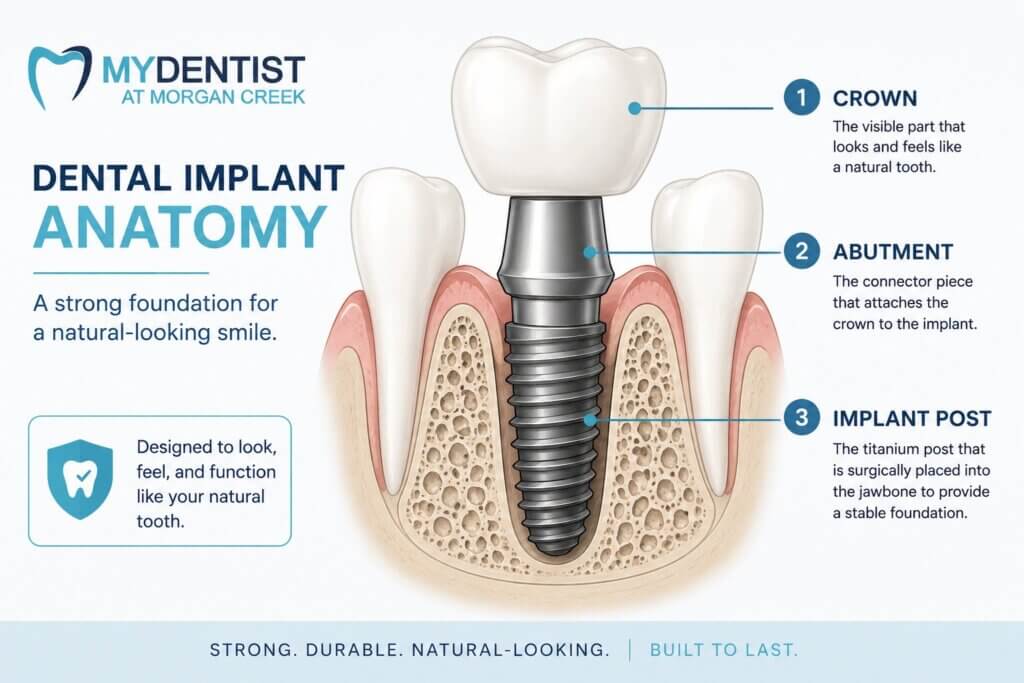
At their core, dental implants are artificial tooth roots. While a crown replaces the part of the tooth you see above the gumline, the implant replaces what is underneath. These are small, screw-like posts typically made of medical-grade titanium. Titanium is used because it is biocompatible, meaning it has the unique ability to fuse directly with your jawbone in a process called osseointegration. This creates a rock-solid anchor for your new teeth.
An implant is generally composed of three distinct parts:
- The Implant Post: This is the titanium screw that serves as the root.
- The Abutment: This is a connector that attaches the crown to the implant post.
- The Crown: This is the custom-made, natural-looking tooth that is visible in your mouth.
The use of dental implants is not a new concept. In fact, the modern version of dental implants has been used successfully since 1965. Once fusion is complete, the implant serves as a foundation for a variety of restorations:
- Single Crowns: To replace one missing tooth without having to grind down the healthy teeth next to it.
- Implant-Supported Bridges: To replace several teeth in a row, providing a stable platform for chewing.
- Implant-Supported Dentures: To secure a full arch of teeth so they never slip, click, or require messy adhesives while you are talking or eating.
It is important to understand that this is a multi-step journey. Implant treatment typically unfolds over several months, because your jawbone needs time to heal and bond with the post before it can safely support a restoration. That timeline is actually a feature, not a flaw. It’s what makes implants so stable and long-lasting compared to other options. Rushing this process would mean placing a crown on a post that hasn’t fully integrated, which increases the risk of the implant loosening or failing down the road.
Implants vs. Bridges vs. Dentures
| Feature | Dental Implants | Dental Bridges | Dentures |
| Lifespan | Post can last a lifetime; crown 15–20+ years | 10–15 years | 5–10 years, often need relining |
| Impact on neighbouring teeth | None | Requires grinding down adjacent teeth | None, but can affect gum ridge over time |
| Bone preservation | Stimulates jawbone, prevents bone loss | Does not prevent bone loss | Does not prevent bone loss |
| Stability | Fixed and permanent | Fixed and permanent | Can shift or slip, especially over time |
| Initial cost | Higher upfront | Moderate | Lower upfront |
| Long-term value | Often most cost-effective over time | Moderate | May require repeated replacement |
| Daily care | Brush and floss like natural teeth | Brush and floss, special flossers under bridge | Remove and clean daily |
Am I a Candidate for Dental Implants?
The most common question we hear at My Dentist at Morgan Creek is whether a patient is actually a fit for this technology. The good news is that most people who are healthy enough to have a routine tooth extraction are likely good candidates for an implant. However, we look at several specific medical and oral health factors during an implant consultation South Surrey / White Rock to ensure the highest success rate.
Medical and Oral Health Factors
Your dentist looks at a handful of specific things when assessing whether implants will work for you. None of these are pass-or-fail on their own. Think of them as pieces of a bigger picture your dentist puts together during your consultation and imaging appointment.
1. Healthy Gums
Active gum disease needs to be treated before implant surgery. Healthy gums are essential for healing and for the long-term success of the implant, because the tissue around an implant needs to seal tightly against it, much like it does around a natural tooth. If you have gum disease, your dentist will typically start with a deep cleaning or periodontal therapy first. Once your gums are stable and healthy, implants become a realistic option again.
2. Adequate Jawbone Density
Implants need enough healthy jawbone to anchor into. If you’ve been missing a tooth for years, some bone loss is common, since bone needs the stimulation of a tooth root to stay strong. This doesn’t automatically rule you out. Bone grafting can often rebuild the area enough to support an implant. Grafting material can come from your own body, a donor source, or a synthetic substitute, and your dentist will recommend the option that best suits your situation. In many cases, grafting adds a few months to the overall timeline, but it doesn’t change the outcome. It just means the process takes a bit longer to set up a strong foundation.

3. Overall Health and Healing Capacity
Conditions like uncontrolled diabetes, autoimmune disorders, or a history of radiation therapy to the jaw can affect healing. This doesn’t mean implants are off the table. It means your dentist will want your condition well managed first, and may coordinate with your physician. For example, patients with diabetes that’s well controlled through medication and diet generally heal from implant surgery just as predictably as patients without diabetes. The key factor isn’t the diagnosis itself; it’s how stable and managed the condition is at the time of treatment.
4. Bite and Jaw Alignment
Your dentist will check how your jaw joints and bite work together, since this affects where implants can be placed and how they’ll function once restored. If you clench or grind your teeth at night, your dentist may also recommend a nightguard to protect your implant crown from excess force, the same way it would protect a natural tooth.
5. Good Oral Hygiene
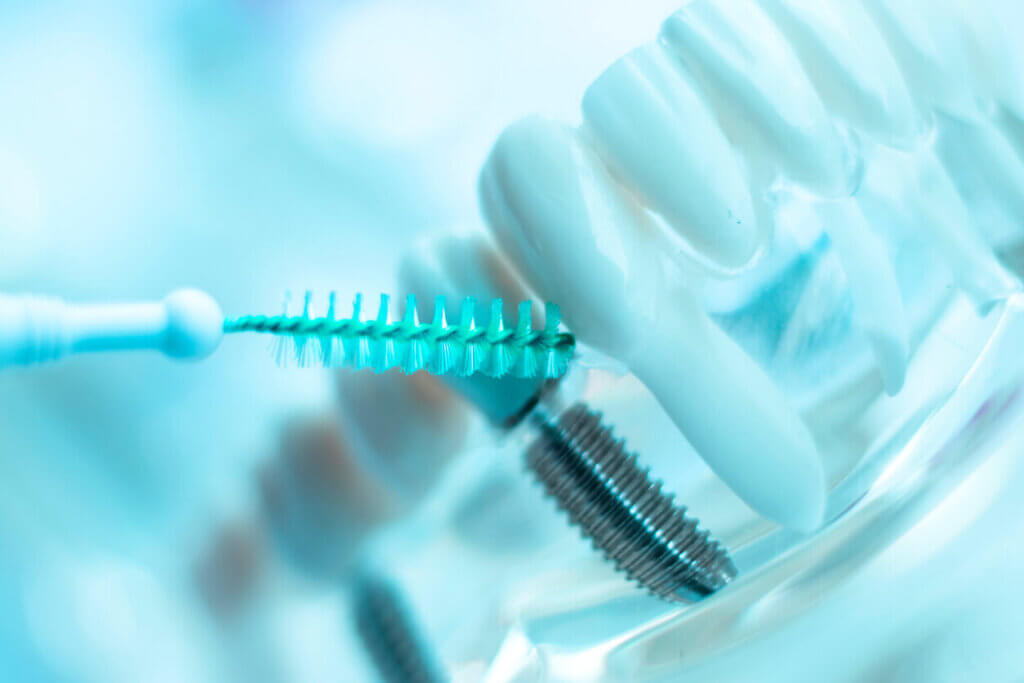
Implants cannot get cavities, but you need to maintain good oral hygiene because the gums and bone around them can still get infected if plaque is allowed to build up. You must be committed to brushing twice a day and flossing daily just as you would with your natural teeth to ensure your investment lasts.
Lifestyle and Expectations
Beyond the clinical picture, a few practical factors matter too, and they’re just as important as the medical side, even though they get talked about less. Your daily habits and overall health management play a massive role in how well your body heals after surgery.
Tobacco Use
Smoking slows healing and increases the risk of implant failure, mainly because it reduces blood flow to the gum and bone tissue that needs to heal around the new implant. Many dentists will still treat smokers, but they’ll usually recommend cutting back or quitting, at least around the time of surgery. Even a temporary pause, ideally starting a couple of weeks before surgery and continuing through the initial healing period, meaningfully improves your odds of a smooth outcome.
Controlled Medical Conditions
Chronic illnesses like diabetes do not automatically disqualify you, but they must be well-managed. If your blood sugar levels are unstable, your body’s ability to fight infection is compromised. In these cases, we coordinate with your family doctor to ensure the procedure is safe for you.
Cost and Budget
Cost and budgeting are also part of the lifestyle conversation, even if it feels like a separate topic. Implants typically involve a higher upfront investment than a bridge or denture, spread across a few different stages of treatment. Many patients find it helpful to ask about payment plans or financing options during their consultation, so the financial side feels as clear as the clinical side.
Expectations
Finally, think about your expectations. Implants look and function like natural teeth, and most patients are thrilled with the result, often telling us they forget which tooth was replaced within a matter of weeks. But like any dental work, they perform best when properly cared for and monitored over time. Going in with a realistic picture, rather than expecting perfection with zero maintenance, sets you up for the best long-term outcome.
Who is Not a Candidate for Dental Implants?
While modern dentistry has made implants accessible to almost everyone, there are a few situations where they might not be the best choice. You may not be an ideal candidate if you have:
- Uncontrolled chronic diseases that impair healing.
- Active, untreated periodontal disease.
- Heavy smoking or alcohol abuse habits.
- Extreme bone loss with no willingness to consider bone grafting or sinus augmentation.
- Incomplete jaw development, which is why we usually wait until a person is in their early adulthood.
Even in these cases, “not right now” is usually more accurate than “never.” Many patients who weren’t ready for implants a few years ago become excellent candidates once an underlying issue is treated or stabilized. We’ve seen patients quit smoking, get their diabetes under better control, or complete a course of periodontal therapy, and go on to have completely successful implant treatment afterwards.
It’s also worth mentioning that “not a candidate for implants right now” doesn’t mean you’re left without options. In these situations, your dentist can walk you through alternatives like a well-fitted bridge or an updated denture, while keeping the door open to revisit implants later if your circumstances change.
Candidate Checklist Overview
| Factor | Good Candidate Signs | May Need Extra Steps |
| Bone density | Sufficient bone at implant site | Bone loss present, but graftable |
| Gum health | Healthy, disease-free gums | Active gum disease needs treatment first |
| Overall health | Stable, well-managed conditions | Uncontrolled diabetes or similar conditions |
| Smoking status | Non-smoker or willing to reduce | Heavy smoker unwilling to adjust |
| Age | Fully grown jawbone (adult) | Still-growing jaw (children, teens) |
| Commitment | Comfortable with a multi-month process | Expecting an instant, single-visit fix |
Why People in South Surrey Choose Implants
Residents of Morgan Creek, Grandview Heights, and Sunnyside often choose implants because they want a long-term solution that matches their active lifestyles. Dental implants in South Surrey BC / White Rock provide a level of security that traditional dentures or bridges simply cannot offer.
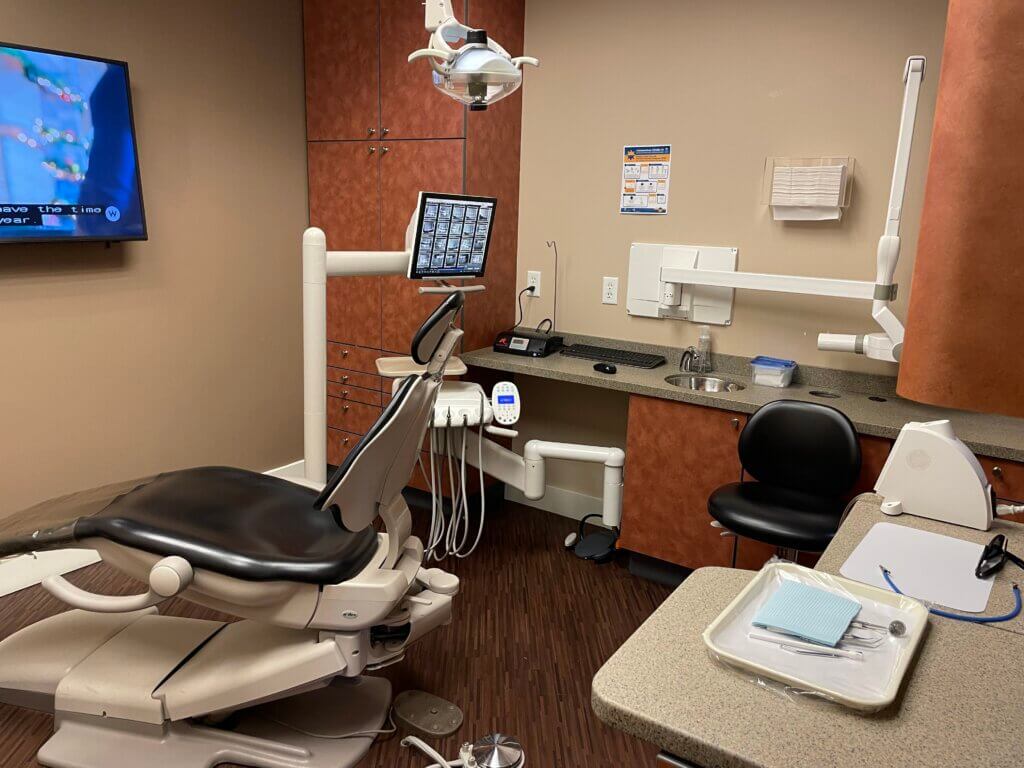
At My Dentist at Morgan Creek, we combine over two decades of experience with advanced technology to make the process as comfortable as possible. We were one of the first dental offices in Canada to introduce guided implant surgery in 2005. We use 3D Sirona imaging and our iTero Lumina scanner to get a 360-degree view of your jaw, which allows us to plan the exact placement of the implant with extreme precision. For those who feel nervous about the surgical aspect, we offer The Wand for virtually painless numbing and various sedation options to help you feel completely at ease.
The Dental Implant Process
Understanding the steps helps take the mystery out of the procedure. Many of our patients find that they can return to their normal daily activities within just a few days after the placement.
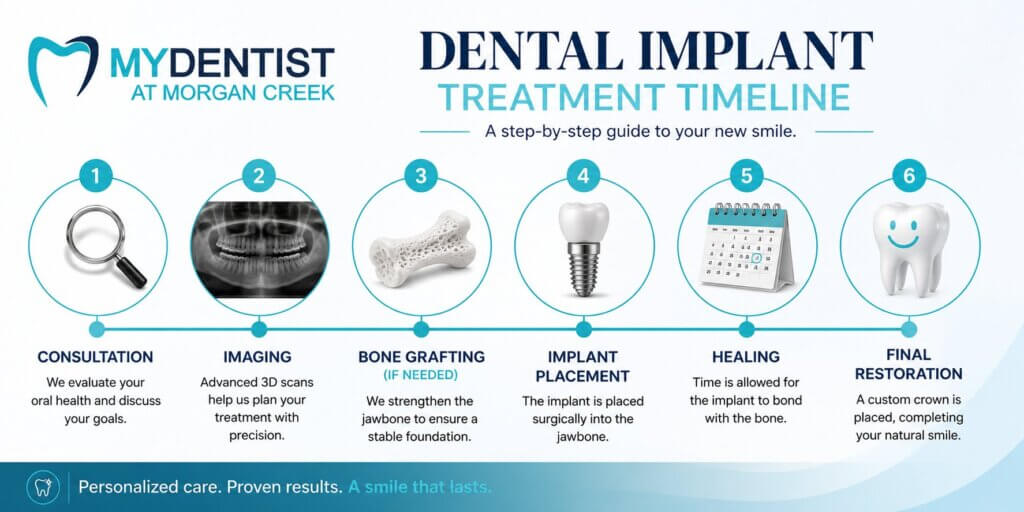
- Consultation and Assessment: We review your medical history and use digital X-rays and 3D scans to evaluate your bone density and jaw structure.
- Preparation (if needed): If the tooth is still present, it is extracted. If there is not enough bone, we perform a bone graft or sinus augmentation to create a sturdy base.
- Surgical Placement: The titanium post is gently inserted into the jawbone. This is usually done under local anesthesia, but IV sedation is available if you prefer.
- Healing and Integration: Over the next three to six months, your bone grows around the implant in a process called osseointegration. We can often provide a temporary tooth during this time so you are never without a smile.
- Restoration: Once healed, we attach the abutment and your custom-made crown, bridge, or denture that matches your natural teeth perfectly.
The Systemic Link: Oral Health and Your General Well-being
It is vital to recognize that oral health is not confined to your mouth. Billions of bacteria live in the oral cavity, and if left unchecked by missing teeth gaps or gum disease, they can enter the bloodstream.
Research has linked poor oral health to several systemic conditions:
- Cardiovascular Disease: Bacteria can cause chronic inflammation, increasing the risk of heart attack or stroke by clogging arteries.
- Diabetes: Gum disease can make blood sugar levels much harder to control, creating a dangerous cycle.
- Cognitive Decline: Studies have found that individuals with Alzheimer’s or dementia often have more rapid memory loss if they also suffer from gum disease.
- Respiratory Issues: Bacteria from the mouth can travel to the lungs, potentially leading to pneumonia or bronchitis.
By choosing dental implants, you are not just fixing a gap; you are investing in your overall longevity.
Common Questions and Fears
Does getting a dental implant hurt?
Most patients are surprised to find that the procedure involves very little discomfort. It is typically less stressful than a standard tooth extraction, and any post-surgical soreness is easily managed with over-the-counter pain relievers.
How long do dental implants last?
With proper care and regular dental checkups, implants are designed to last for decades or even a lifetime. Unlike bridges that may need replacement every 10 to 15 years, the titanium root is a permanent fixture.
Am I too old for dental implants?
There is no upper age limit for this procedure. We have successfully placed implants for patients in their 80s and 90s, provided they are in good general health and have enough bone to support the implant.
What if I’m nervous about dental treatment?
We specialize in gentle dentistry. Between our pen-like Wand anesthesia system and our compassionate team, we work hard to make sure you feel safe and relaxed throughout your visit.
Are implants more expensive than bridges or dentures?
While the initial cost is higher, implants are often more cost-effective over time because they do not require frequent replacement or expensive adhesives. They also protect your remaining healthy teeth and your jawbone.
How long does the implant process take?
The timeframe varies based on your individual healing speed and whether you need bone grafting. On average, it takes between three and nine months from the first consultation to the final tooth placement.
Common Dental Implant Outcomes
The Active Senior
A White Rock resident had struggled for years with a lower denture that would slip while he was trying to enjoy a meal at local restaurants. He felt self-conscious every time he laughed. After his assessment, we placed two implants to secure his denture. He now says he feels like his younger self again and can eat whatever he wants without a second thought.
The Sports Injury
A local young adult lost a front tooth during a hockey game. She didn’t want to grind down her healthy adjacent teeth for a traditional bridge. We used a single-tooth implant and a custom porcelain crown. Today, she often forgets which tooth is the implant because it looks and feels completely natural.
Ready to Find Out Where You Stand?
Dental implants are more than just a way to fix a gap in your teeth; they are a way to protect your facial structure, your oral health, and your quality of life. While this guide provides a starting point, the only way to know for sure if you are a candidate is to have a professional look at your unique situation.
We invite you to take the next step toward a permanent, beautiful smile. Our team is here to listen to your concerns and provide a personalized plan that fits your needs.
Schedule your personalized implant consultation South Surrey / White Rock today to learn more about your options. Our goal is to provide you with the highest quality care in a friendly, comfortable environment.
| Schedule your personalized implant consultation South Surrey / White Rock today to learn more about your options. Our goal is to provide you with the highest quality care in a friendly, comfortable environment. 📞 Call us to book | 🌐 Contact Us Online |
Schedule a dental implant assessment at My Dentist at Morgan Creek in South Surrey / White Rock to find out if implants are right for you.