



If you’re searching for a dentist in South Surrey or White Rock and keep running into the term “iTero Lumina,” you’re probably trying to answer one of three things: what actually happens during a digital scan, whether it’s worth choosing a clinic that has one, or how it stacks up against the impressions you remember from a previous visit. Maybe you’re getting ready to start Invisalign and want to know what your first appointment looks like. Maybe you’ve got a dental crown coming up and you’re dreading the tray of putty sitting in your mouth for two minutes that somehow always feels like ten. Or maybe you just moved into the Morgan Creek area and you’re comparing a few dental offices before picking one.
We get some version of these questions almost every week, and the honest answer is that iTero Lumina scanning has changed more about day-to-day dentistry than most patients expect. Not because it’s flashy, but because it removes friction from parts of a visit that used to be genuinely unpleasant. We created this guide to walk you through what the scanner does, who notices the biggest difference, how it fits into a wider digital workflow at our South Surrey dental clinic, and what to actually expect if you book a scan with us.
What Is iTero Lumina Scanning, in Plain Terms?
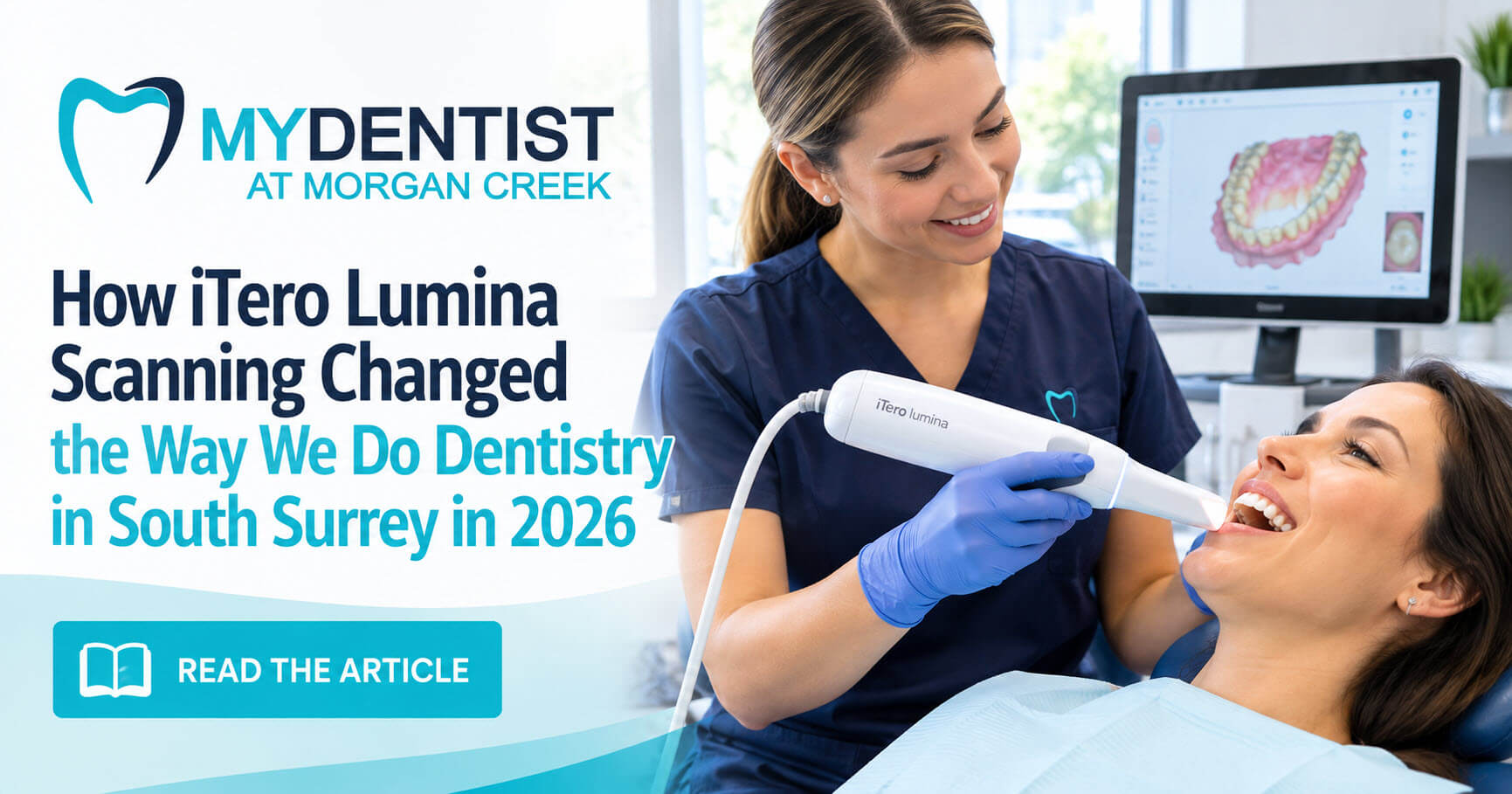
The iTero Lumina is a handheld wand about the size of an electric toothbrush. As we move it slowly around your mouth, it captures a continuous stream of images of your teeth, gums, and bite, thousands of frames per pass. Software stitches those frames together in real time, and within a few minutes, a full 3D model of your mouth appears on the screen next to the chair.

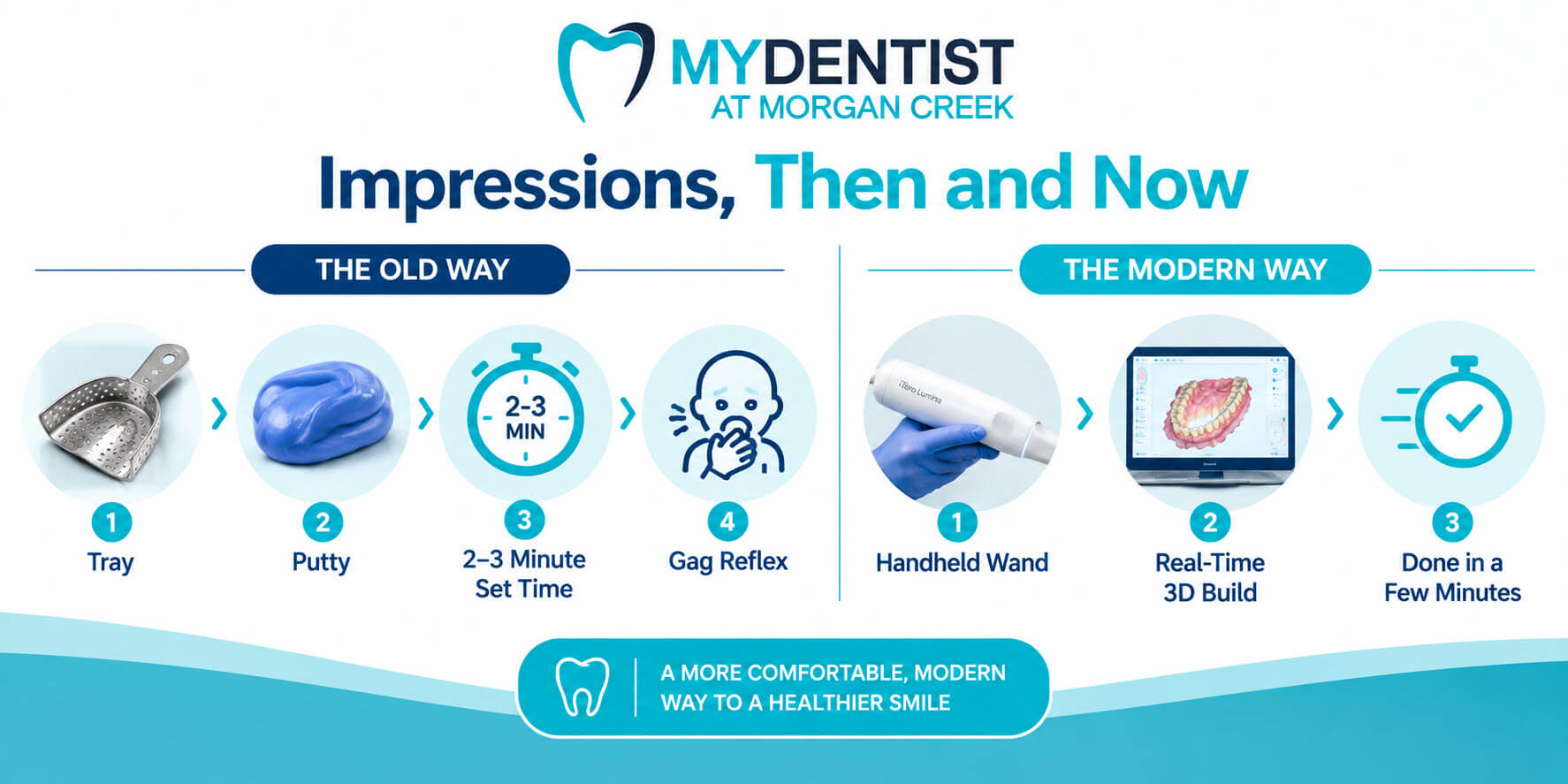
There’s no tray. No putty. No sitting still while material sets and slowly hardens against your palate. No aftertaste, and for most patients, no gag reflex trigger at all, since the wand never fills your whole mouth the way an impression tray does.
What you’re left with is a precise digital map that we can use immediately. That map feeds into Invisalign planning, crown and bridge preparation, night guard and sleep appliance fabrication, orthodontic monitoring, and general record-keeping that lets us track subtle changes in your bite or gum line over the years. It replaces a physical mold with a file we can zoom into, measure, rotate, and send electronically the same day.
It’s worth being clear about what the scanner isn’t. It captures surface detail, the visible structure of teeth and soft tissue, not what’s happening below the gumline or inside the bone. For that, we still rely on X-rays and 3D imaging, which we’ll get to shortly. The two technologies do different jobs, and a good digital workflow uses both rather than treating one as a replacement for the other.
How It Changed the Patient Experience
No More Messy Impressions
This is the difference patients notice first, and it’s the one we hear about most often at checkout. Traditional impressions were manageable for most adults, but genuinely unpleasant for anyone with a strong gag reflex, dental anxiety, or sensory sensitivities. The material has a distinct chemical taste, it needs a minute or two to set while you sit with a full tray pressing against your palate, and if you move even slightly before it hardens, we’d sometimes have to redo the whole thing.
For children, it was frequently the worst part of the entire visit, worse than the actual dental work in most cases. Kids don’t always understand why they need to hold still with a mouth full of material, and the texture alone was enough to end a few appointments early over the years.
With iTero Lumina, that step is simply gone. The wand is small enough to move around comfortably, the scan itself takes a few minutes, and there’s nothing to sit with, swallow, or wait to harden. Patients who’ve had impressions done the old way at a previous dentist are usually the ones most relieved by the switch.
You Can See Your Teeth in Real Time
Patients are often surprised to find they can watch the scan build on screen as it happens. It isn’t just a clinical tool for us, it’s a shared reference point. When we’re talking through Invisalign, a chipped tooth, or a cosmetic concern, you can see exactly what we’re describing instead of trying to picture it from a verbal explanation.
That matters more than it sounds like it would. A lot of dental anxiety comes from uncertainty, not knowing what’s actually happening in your mouth or why a certain treatment is being recommended. Being able to point at a rotated 3D model and say “this is the gap we’re closing” or “this is the wear pattern we’re watching” turns an abstract conversation into a concrete one. Patients tend to ask better, more specific questions once they can see the model, which usually means they leave the appointment with a clearer understanding of their own treatment plan.
More Accurate Treatment Planning, Fewer Surprises
Digital scans are dimensionally more accurate than traditional impressions, which can distort slightly as the material sets, shrinks, or gets handled on its way to a lab. For Invisalign, where aligner fit depends on precise measurements down to fractions of a millimeter, that accuracy has a real, practical impact. Aligners tend to fit better from the very first set, and the mid-treatment adjustments that used to happen because of impression error come up less often.
For crowns and other restorations, the scan feeds directly into our workflow alongside Sirona 3D imaging and our in-house Sirona 3D printing capability, technology we were among the first clinics in Canada to adopt. Instead of a scan going to an outside lab and a temporary crown holding you over for two or three weeks, we can design, mill or print, and in many cases seat a permanent restoration within a much shorter window. That connected process, from diagnosis through to the finished piece, is really the bigger story behind the scanner itself.
| Factor | Traditional PVS Impressions | iTero Lumina Scanning |
| Time in chair | 8–12 minutes including set time | 2–5 minutes, no set time |
| Comfort | Tray fills the mouth; common gag trigger | Small wand; passive, minimal gag trigger |
| Redo rate | Higher; distortion or movement means starting over | Lower; software flags gaps to fix on the spot |
| Taste or texture | Chemical taste, thick paste texture | None |
| Turnaround | Physical mold shipped to an outside lab | Digital file sent electronically same day |
| Best for | Practices without digital scanning | Invisalign, crowns, night guards, kids, anxious patients |
Who Benefits Most From Digital Scanning?
Most patients notice the difference, but a few groups feel it most clearly, and it’s worth knowing which one you fall into before your appointment so you know what to expect.
| Patient Group | What Changes For Them | Common Treatments Involved |
| Invisalign patients, adults and teens | Faster start; first aligner set typically fits with fewer adjustments | Clear aligner therapy, retainers |
| Patients with dental anxiety | One of the more stressful steps is removed entirely; scan is passive | Any treatment requiring a digital model |
| Children | Feels like a novelty rather than a procedure; shorter, easier visits | Orthodontic records, sealants, general checkups |
| Crown or appliance patients | Precise starting point without a physical mold; often faster turnaround | Crowns, bridges, night guards, sleep apnea appliances |
A quick note on that last group: night guards and sleep apnea appliances are two of the most overlooked uses of digital scanning. Patients tend to associate iTero with Invisalign specifically, but for anyone who grinds their teeth or has been referred for a sleep study, the same accuracy that makes aligners fit better also makes an appliance sit properly against your bite instead of shifting overnight.
What Happens During Your Scan, Step by Step
If you’ve never had a digital scan before, here’s roughly what to expect. It’s a lot less clinical than it sounds.
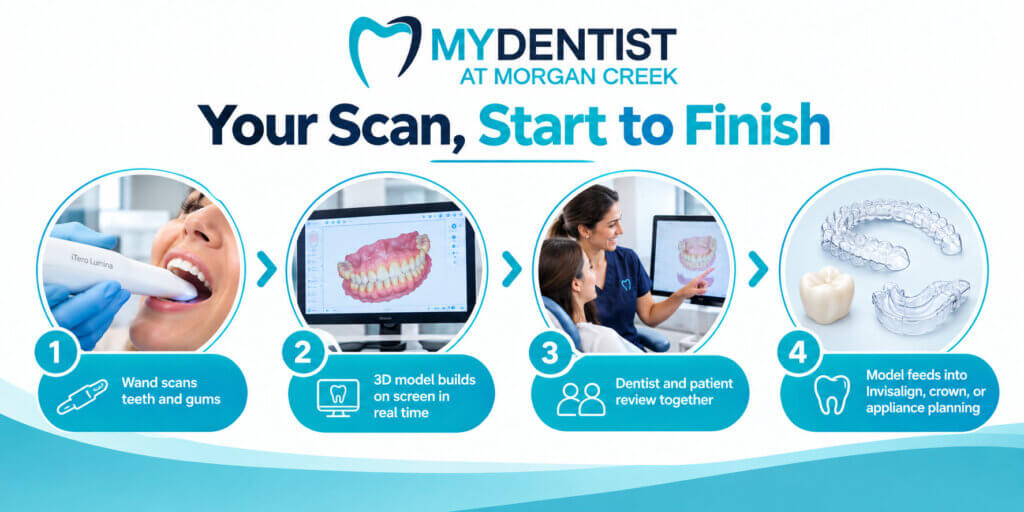
- We’ll dry your teeth briefly with air and cotton rolls so the scanner can read the surface clearly.
- The clinician guides the wand slowly along your upper arch, then your lower arch, then your bite together. Most patients just sit back and breathe normally.
- The 3D model builds on the monitor in real time. If a section looks incomplete, we simply rescan that specific area rather than starting over.
- Once the model is complete, we review it together on screen and talk through whatever treatment it’s being used for.
- The file is saved to your chart and, depending on the treatment, sent electronically the same day to a lab or into our in-house design software.
The whole process typically takes less time than a routine cleaning takes to set up, and there’s no recovery step. You can eat, drink, and talk normally the moment we’re done.
Part of a Bigger Picture: Scanning, Imaging, and In-House Printing
iTero Lumina scanning is one piece of a broader approach to accurate, comfortable care that we’ve been building at My Dentist at Morgan Creek since 2001. On its own, a surface scan is useful. Combined with the rest of our digital workflow, it becomes something closer to a complete diagnostic and production pipeline under one roof.

We also use Sirona 3D imaging for detailed diagnosis and treatment planning, giving us a clear view of bone structure, root positions, and anatomy that a standard X-ray can’t always show. And our Sirona 3D printing capability means crowns, denture bases, and surgical guides can be produced on-site, which cuts down on the number of appointments many treatments would otherwise require.
| Tool | What It Actually Does | Why It Matters to You |
| iTero Lumina scanner | Captures surface detail of teeth, gums, and bite | Faster, more comfortable impressions with fewer redo visits |
| Sirona 3D imaging | Produces detailed views of bone, roots, and surrounding anatomy | Catches issues a surface scan or 2D X-ray alone would miss |
| In-house 3D printing | Fabricates crowns, guides, and appliance components on-site | Fewer outside lab delays; shorter time between visits |
When these tools work together, the practical benefit to you is straightforward: fewer visits, less waiting between appointments, and more confidence that decisions about your treatment are based on accurate information rather than an estimate from a physical mold.
Common Misconceptions Worth Clearing Up
A few misunderstandings come up often enough that they’re worth addressing directly, mostly because they shape expectations before a patient even walks in.
- “Digital scanning replaces X-rays.” It doesn’t. A surface scan and an X-ray or 3D image show different things, and most treatment planning still needs both.
- “Scanning is only for Invisalign.” It’s used across crowns, night guards, sleep appliances, orthodontic monitoring, and routine records, not just clear aligners.
- “Any digital scanner is basically the same.” Accuracy, scan speed, and how well the software handles wet or tricky areas of the mouth vary quite a bit between systems, which is part of why we chose this one.
- “Digital scanning means same-day crowns every time.” It often shortens the timeline significantly, but same-day restoration still depends on the specific case, the tooth involved, and what the situation actually calls for.
What This Means If You’re New to South Surrey or White Rock
If you’ve recently moved to the area and you’re looking for a dental home for your whole family, it’s worth understanding what technology a clinic actually uses before you commit to it, rather than assuming every office offers the same experience.
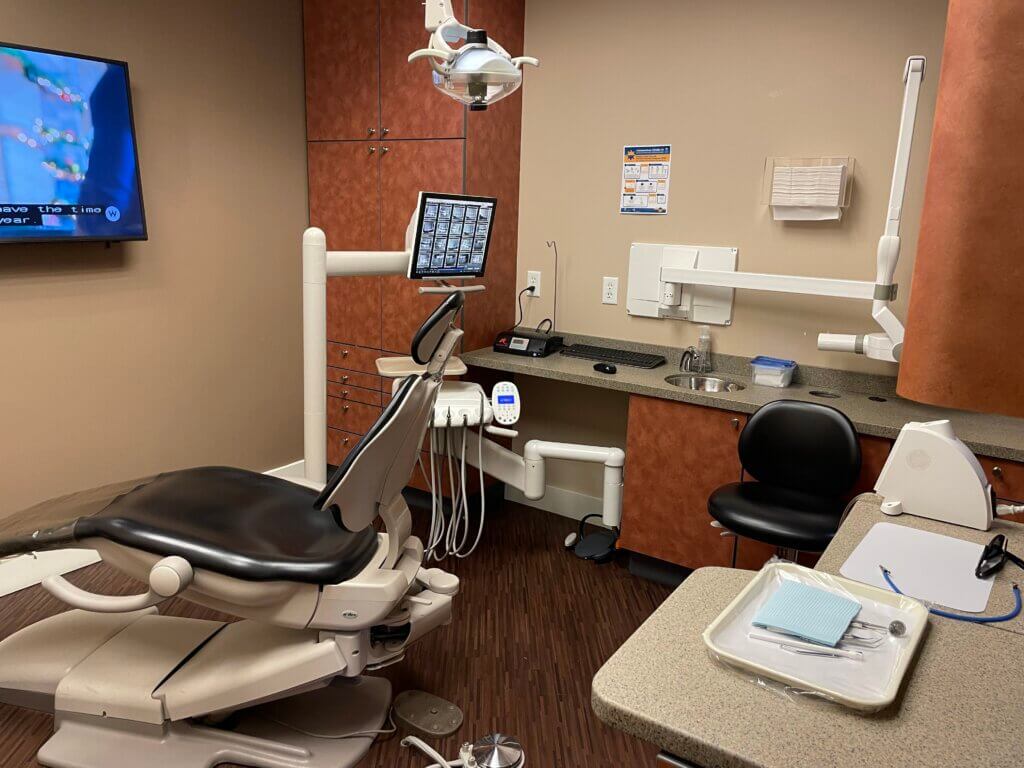
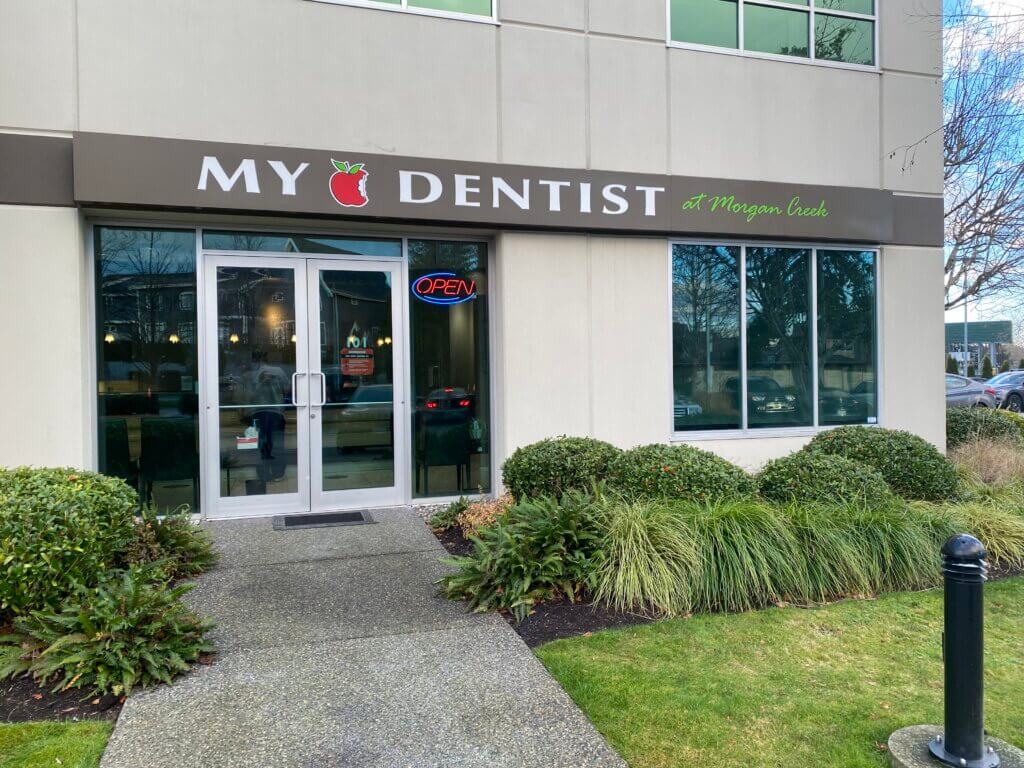
Not every practice in South Surrey or White Rock combines digital scanning, 3D imaging, and in-house 3D printing the way we do. My Dentist at Morgan Creek has been part of the Morgan Creek community long enough to know that patients want more than impressive equipment sitting in the corner of a treatment room. They want to feel comfortable, informed, and like someone is actually explaining what’s happening and why.
Our team takes the time to walk through what we’re doing at each step, and we provide written treatment estimates so there are no surprises about cost or timeline once a scan is complete. Because we handle everything from pediatric checkups to dental implants and on-site oral surgery under one roof, referrals to outside specialists are rarely needed, which keeps your care, and your records, in one place.
Frequently Asked Questions
What is iTero Lumina scanning used for at your South Surrey clinic?
We use it to create precise digital models of your teeth for Invisalign fitting, crown preparation, night guards, sleep apnea appliances, and other treatments that previously required a traditional putty impression.
Does the iTero Lumina scan hurt?
No. The scan is completely non-invasive. A small wand moves gently around your mouth while it captures images, and most patients describe it as quick and mildly novel rather than uncomfortable in any way.
Is iTero Lumina scanning suitable for children?
Yes, and it’s often better suited to kids than traditional impressions specifically because it removes the gagging and discomfort that came with a full tray of material. A lot of children find watching their own teeth appear on screen more interesting than stressful.
How does iTero Lumina scanning improve Invisalign treatment?
The scan produces a highly accurate 3D model used to design your aligners. Greater accuracy at that stage generally means a better-fitting first set and fewer adjustment visits over the course of treatment.
Does digital scanning replace X-rays?
No. iTero Lumina captures the surface structure of your teeth and gums. We still use Sirona 3D imaging for detailed diagnostic views of bone, roots, and surrounding anatomy. The two serve different purposes and work best together.
How long does an iTero Lumina scan take?
A full-mouth scan typically takes just a few minutes, considerably faster than waiting for impression material to set, and you can see the results building on screen as it happens.
Can I see my scan results during the appointment?
Yes. The 3D model builds in real time as the scan is taken, and our team can walk you through what we’re seeing, which tends to make treatment conversations easier to follow and a lot less abstract.
Final Thoughts
Technology alone doesn’t make a dental visit better. What makes the difference is how it’s used, and in this case, the shift from physical impressions to digital scanning has genuinely changed how comfortable and how well-informed a visit can be, particularly for the patients who needed that change the most: anxious adults, kids, and anyone who’s sat through a bad impression appointment before and dreaded the next one.
If you’re weighing dental offices in South Surrey or White Rock and technology like this matters to your decision, ask directly what a clinic actually uses day to day, not just what’s listed on their website. We’re happy to answer that question in person, and to show you exactly what a scan looks like before you commit to anything.
Book a Scan at Our South Surrey Dental Clinic
If you’d like to experience iTero Lumina scanning for yourself, or if you’re curious about Invisalign, a crown, or any other treatment that starts with a digital impression, we’d be glad to walk you through it in person.
Book online, or call us at 778-742-5731. We’re here for patients across South Surrey, White Rock, and the Morgan Creek community.